FEATURES

2027 Radar: What We’ll Be Watching Most Closely in the New Year...
26 November 2026
What we’ll be watching most closely in the new year: The shape of Skydance in Asia (specifically who’s in/out in the team under James Gibbons); Japanese drama’s multi-pronged efforts to regain at least some of its one-time dominance over Korea, plus who gets international rights to blockbuster Japanese series “Vivant”; Thailand’s uber-militant fan clubs and the upside/downside of hyper-attachment to GL pairs especially; AI, of course; how Indonesia’s MNC Sky Vision plans to pay its bills; and whether Eurovision Asia will be back after this year’s drama. Plus microdrama and brands...
▶ SKYDANCE IN ASIA Any minute now we’re going to hear what the new Skydance team in Asia looks like (or perhaps we already have between this magazine’s print date and right now). And maybe we’re going to pick over the decisions, try to figure out the logic, probably go market by market to guess at the impact might be, send WhatsApp polls to our contact groups...
The only thing we know for sure so far is that, in the early hours of our Asia morning on 31 October, a dear-team memo from JB Perrette, Co-Chair and Chief Business Officer, Skydance DTC and Co-Chair and Chief Business Officer, Skydance TV, told the universe that Warner Bros Discovery’s (WBD) long-time Asia head, James Gibbons, would lead Skydance in the region as President and MD, APAC and MENA.
The four people picked for the second tier are Paramount’s Beverley McGarvey, WBD’s Jason Monteiro and Shonali Bedi. Before the Skydance acquisition, McGarvey was President Network 10 & Head of Streaming, Paramount Australia and New Zealand. Monteiro was SVP Streaming, HBO Max APAC, and Bedi was SVP, head of commercial partnerships, strategy & insights, APAC.
That was the easy part. The next layers not so much. And the big question going into the new year is when (if?) the brakes could come off investment in content in Asia.
▶ JAPAN This time last year we were looking at Japan’s changing approach to premium IP and what comes after the realisation that the domestic market is less of a comfort zone than it used to be. That stays on our 2027 list along with a post-morte...
What we’ll be watching most closely in the new year: The shape of Skydance in Asia (specifically who’s in/out in the team under James Gibbons); Japanese drama’s multi-pronged efforts to regain at least some of its one-time dominance over Korea, plus who gets international rights to blockbuster Japanese series “Vivant”; Thailand’s uber-militant fan clubs and the upside/downside of hyper-attachment to GL pairs especially; AI, of course; how Indonesia’s MNC Sky Vision plans to pay its bills; and whether Eurovision Asia will be back after this year’s drama. Plus microdrama and brands...
▶ SKYDANCE IN ASIA Any minute now we’re going to hear what the new Skydance team in Asia looks like (or perhaps we already have between this magazine’s print date and right now). And maybe we’re going to pick over the decisions, try to figure out the logic, probably go market by market to guess at the impact might be, send WhatsApp polls to our contact groups...
The only thing we know for sure so far is that, in the early hours of our Asia morning on 31 October, a dear-team memo from JB Perrette, Co-Chair and Chief Business Officer, Skydance DTC and Co-Chair and Chief Business Officer, Skydance TV, told the universe that Warner Bros Discovery’s (WBD) long-time Asia head, James Gibbons, would lead Skydance in the region as President and MD, APAC and MENA.
The four people picked for the second tier are Paramount’s Beverley McGarvey, WBD’s Jason Monteiro and Shonali Bedi. Before the Skydance acquisition, McGarvey was President Network 10 & Head of Streaming, Paramount Australia and New Zealand. Monteiro was SVP Streaming, HBO Max APAC, and Bedi was SVP, head of commercial partnerships, strategy & insights, APAC.
That was the easy part. The next layers not so much. And the big question going into the new year is when (if?) the brakes could come off investment in content in Asia.
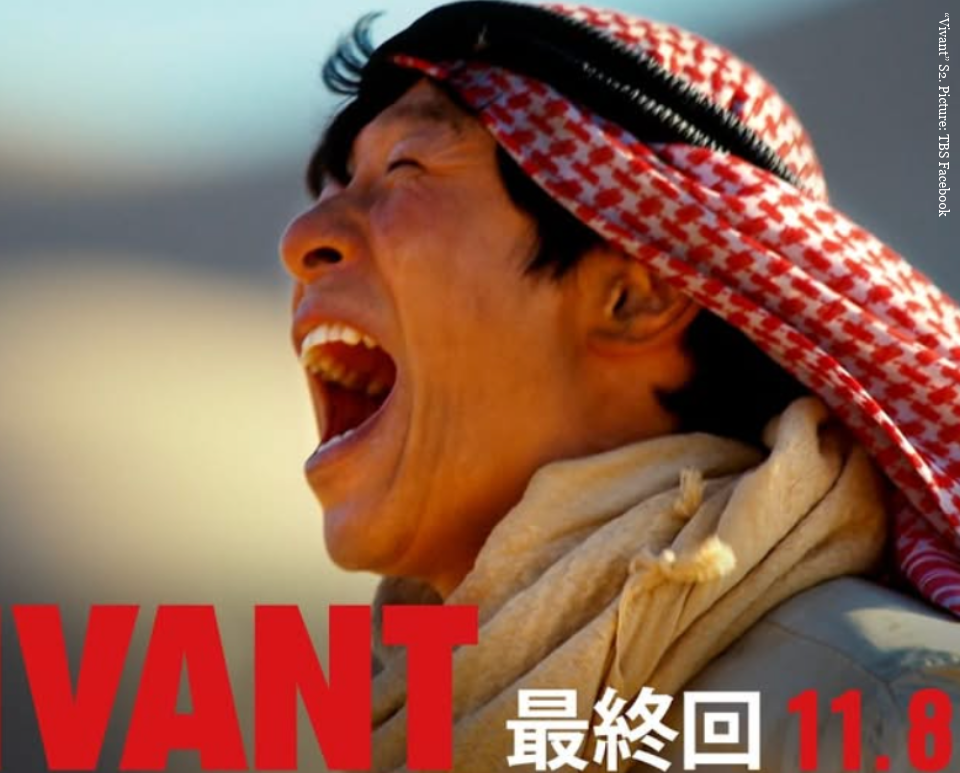
▶ JAPAN This time last year we were looking at Japan’s changing approach to premium IP and what comes after the realisation that the domestic market is less of a comfort zone than it used to be. That stays on our 2027 list along with a post-mortem of the disastrous Cool Japan fund and what comes next. Japan, which gave way to Korea’s K-Wave long ago, will hold onto its manga/anime superpower, but is unlikely to regain any kind of live action/scripted leadership in 2027. There will be wins to follow “Plastic Beauty”, which delivered the biggest single week for Japanese drama on Netflix in 2026 at 46.5M hours around the world. Plus, we’re very curious about the fate of TBS drama “Vivant” season two after Beijing took deep offence at the portrayal of Chinese agents. Ratings at home were spectacular, thanks in part to a multi-platform release strategy. A rumoured US$15-million budget didn’t hurt either. Season two pulled season one back onto Netflix’s top 10 for Japan, although Netflix does not appear to have rights to S2. Will we ever get to see it outside of Japan though? Hopefully. Mainland China’s ire was bad though, so...
▶ AI, of course We don’t for a nanosecond believe roles that used to be filled with humans aren’t being eliminated as AI takes over. Remember the seed drill and mechanical reaper and their impact on the rural workforce? Yeah, well... At the same time, we like the line that says humans crave real human contact and that handing over the drudge work to AI frees people to be more creative. If it doesn’t kill everyone first. Or give rise to a new class of plumbers, electricians and welders. Or rural farmers.
▶ SCRAMBLED EGGS Thailand’s fan clubs are taking their lead from political campaigns – hiring physical billboard trucks to spread their word, organising hashtags, and wielding as much power as they can in the country’s creative corridors, particularly in the GL (Girls Love) segment. Which is, you might say, as it should be. And the rewards in fan meets and merchandising – including in mainland China – have been great. But it’s not un-scary for producers and platforms forced into a new form of diplomatic relations and negotiation, especially when the force turns militant.
One of the latest campaigns is driven by fans of Thai actress Kornnaphat “Orm” Sethratanapong – or “Omelettes” – and their #JusticeForOrm rallying cry. The LED protest trucks deployed outside Ch3’s HQ in Bangkok in November rotated a list of demands alongside general slogans about fair treatment and accountability for what they see as management missteps. This month’s campaign comes a few months after Ch3 stepped in to support their celebrity against allegations by users on Chinese platforms Weibo, Douban and Bilibili about her personal life, including hiring legal representation in Shanghai.
▶ EUROVISION ASIA We want Eurovision Asia to return – really we do. But how? Almost 20 years it took for this year’s inaugural competition to get off the ground. And not two minutes after the closing credits in Bangkok in November, the contest’s foreign organisers were playing outraged over content regulations in Malaysia that were and remain absolutely no secret to anyone – except them, clearly.
Here’s what happened in a nutshell: Malaysia’s largest and most powerful free-TV network, TV3, replaced footage of Thai dancers and gay Philippines celebrity Vice Ganda, who appeared in the live feed to award Malaysia with the Philippines’ highest number of points. The replacement on-screen visuals enabled TV3 to comply with local rules and regulations. That set everyone off…
Eurovision and Asia show producer, the L.A.-based Voxovation, held firm on their “make sure this never happens again” position, using words like “surprised” and “disappointed”. TV3, an early supporter of the first-ever Asia version of the European song contest, had not at presstime commented on the criticism and is not expected to apologise for its decision to comply with Malaysian regulations.
So, back to our question: How will Eurovision Asia come back? We don’t see Malaysia changing their content codes. We don’t see Eurovision and its agents changing their line on LGBTQ+ performances and presentations. “All broadcasters are expected to respect the values of the Eurovision Song Contest and we will work to ensure this doesn’t happen again,” Eurovision said after the Asia show. And indeed it might not...
▶ INDONESIA When will Indonesia’s MNC SkyVision (aka Indovision) repay its creditors? The pay-TV operator, which once enjoyed most-favoured-platform status, has promised that it will – in stages. At press time, details of the debt restructuring plan were vague. Asked by Indonesia’s IDX what happens if creditors rejected the plan, the company said only that it remained optimistic suppliers would approve the plan. Debt repayment obligations were suspended until 17 December 2026 in terms of a commercial court order. Since the ruling, MNC SkyVision said it had been working with court-appointed administrators to inventory and verify creditor claims, and was negotiating with Ascot Group (its one-time partner) and other suppliers. Ascot filed the application; the company’s accounts show an approx US$4M claim from Ascot. MNC SkyVision had 36,742 active subscribers at end-September; average revenue per user (ARPU) was Rp59,000 (approx US$3.30). Its balance sheet at 30 September showed cash and cash equivalents of Rp2,109M (approx US$118,000) against current liabilities of Rp490,522M (US$27.4M). Related-party trade payables totalled Rp203,741M (US$11.4M), with Rp196,376M (US$11M) – 96.39% – outstanding. Third-party trade payables totalled Rp132,302M (US$7.4M), with Rp116,202M (US$6.5M) – 87.83% – outstanding. Related-party trade receivables stood at Rp68,706M (US$3.8M), of which 39.91% had been collected. PT Digital Vision Nusantara accounts for Rp48,419M (US$2.7M), or about 70.5%, of that amount. Third-party trade receivables stood at Rp109,375M (US$6.1M), with 10.19% collected.
▶ BRANDS & CONTENT How the premium production industry in Asia manages an environment where brands are thinking they can/will call the creative shots because they have money and red carpet dreams… and what happens after that. Of course everyone wants the money and a piece of what’s being called the Creator Economy. The strings that come with this? That depends, we think, on the brand managers, not all of whom are created equal, obviously; their KPIs; and their ability to understand the mechanics of a great story. No one, ever, told us they changed their minds about not wanting obnoxious displays of products disturbing their viewing peace.
▶ MICRODRAMA The easy bit of this forecast is that, following a brief and glorious spurt of human activity, AI has and will continue to dominate microdrama slates in Asia, with a leap in brand-funded series. A little less easy to predict is how premium vertical short-form involving all the costs of human talent will evolve – or die trying. Our bet is that the vertical drama opportunity will be integrated with broader entertainment offerings from existing players who already have an audience and want to keep them for those little bits of viewing time between things throughout the day. The question is how audiences will respond to the new generation of premium verticals – or whether fast-food-style AI output will do just fine, thanks. The distribution environment for microdrama apps is already becoming clear: microdrama as a sweetener for broadband packs. We’re already seeing the biggest numbers come from telcos in Thailand and Indonesia who are absolutely delighted with the microdrama alliances they’ve forged so far.
Published in ContentAsia's December 2026 Magazine
Previous

Next