







NEWS

Come Film With Us: The Incentive Arms Race Heats Up; Governments, City Bosses, Studio Facilities Hang Out Their Finest in Hong Kong
23 March 2026
The stands at Hong Kong Filmart told their own story this year. Behind the flags and the finery, serious competition is underway in corridors of power to attract film and TV crews.
Although lower key than at Busan’s Asian Contents & Film Market (ACFM) in 2025, countries, cities and studio facilities at Filmart this year put incentives front and centre of their pavilions, showcases, stands... and T-shirts.
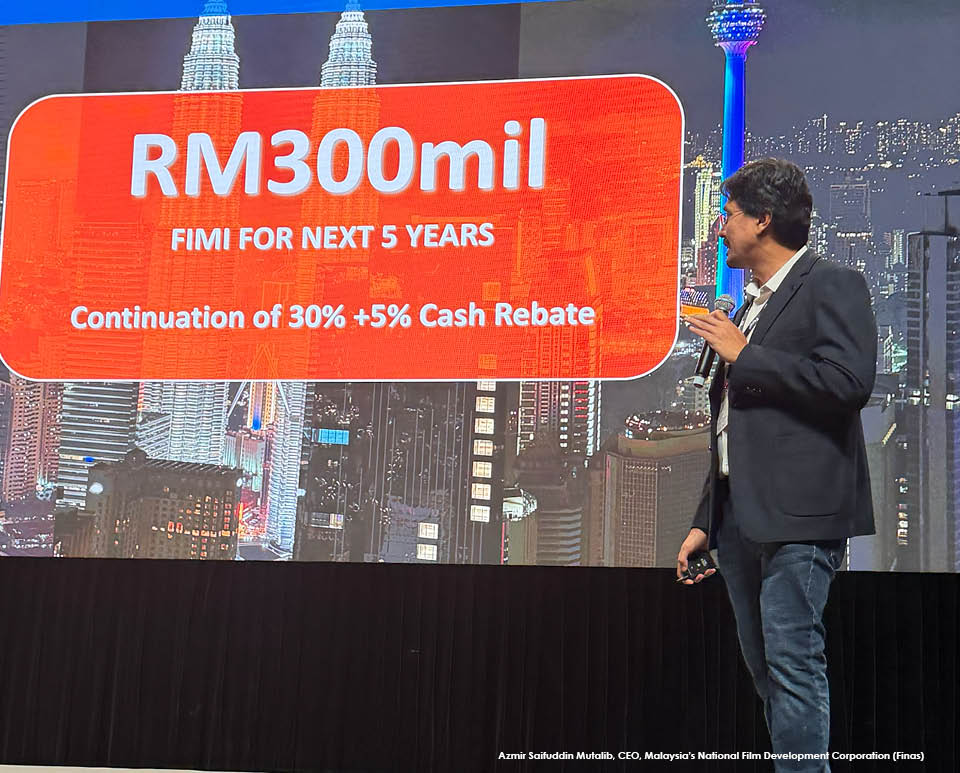
Malaysia kicked off the four-day extravaganza in Hong Kong with an hour-long session highlighting the country’s box-office wins over the past year, grand plans to cement its role as a Southeast Asian production hub, and a slew of incentives that include upsized rebates of hundreds of millions of dollars over five years covering both local and international productions across genres.
Azmir Saifuddin Mutalib, CEO of Malaysia’s National Film Development Corporation (Finas), outlined the country’s attractions, pointing to box office record breakers, and industry boosting legislative and regulatory changes along with the approval of a RM300 million/US$76 million budget for film rebates.
“These are some of the strengths we are pushing for the next five to 10 years,” he said, talking too about regional initiatives that cover, among other sectors, technology. “We want to boost our local films not just within Malaysia but throughout the region,” he said.
If Thailand, which has one of the most developed location services infrastructure in Asia, decided to focus on its Boys Love (BL) muscle this year, neighbouring Cambodia put its physical attractions front and centre of its presence in Hong Kong.
Cambodia’s tourism team drew attention to iconic landmarks such as Angkor Wat, put stills of Angelina Jolie on screen as a testimonial to its attractions, and highlighted a new location scouting programme that covers on-ground costs, including accommodation and guide for five days.
Under the banner of “Cambodia, Your Next Film Destination”, government agency the Cambodia Film Commission present...
The stands at Hong Kong Filmart told their own story this year. Behind the flags and the finery, serious competition is underway in corridors of power to attract film and TV crews.
Although lower key than at Busan’s Asian Contents & Film Market (ACFM) in 2025, countries, cities and studio facilities at Filmart this year put incentives front and centre of their pavilions, showcases, stands... and T-shirts.
Malaysia kicked off the four-day extravaganza in Hong Kong with an hour-long session highlighting the country’s box-office wins over the past year, grand plans to cement its role as a Southeast Asian production hub, and a slew of incentives that include upsized rebates of hundreds of millions of dollars over five years covering both local and international productions across genres.
Azmir Saifuddin Mutalib, CEO of Malaysia’s National Film Development Corporation (Finas), outlined the country’s attractions, pointing to box office record breakers, and industry boosting legislative and regulatory changes along with the approval of a RM300 million/US$76 million budget for film rebates.
“These are some of the strengths we are pushing for the next five to 10 years,” he said, talking too about regional initiatives that cover, among other sectors, technology. “We want to boost our local films not just within Malaysia but throughout the region,” he said.
If Thailand, which has one of the most developed location services infrastructure in Asia, decided to focus on its Boys Love (BL) muscle this year, neighbouring Cambodia put its physical attractions front and centre of its presence in Hong Kong.
Cambodia’s tourism team drew attention to iconic landmarks such as Angkor Wat, put stills of Angelina Jolie on screen as a testimonial to its attractions, and highlighted a new location scouting programme that covers on-ground costs, including accommodation and guide for five days.
Under the banner of “Cambodia, Your Next Film Destination”, government agency the Cambodia Film Commission presented a list of pros, including easy visa and film permit application processes, low production costs, a “stable and peaceful land with friendly smiling people” and a “supportive government”.
“We make filming easy and secure,” said the Cambodian Tourism Board’s Hato Sathya during the showcase. Five Cambodian production houses came to Filmart under the Cambodian Tourism Board banner.
From further afield, the Moscow Film Cluster (Moskino) debuted at Filmart this year with a jaw-dropping 45% rebate, which is higher than almost any comparable incentive anywhere. Four days and more than 100 meetings later, the delegation left Hong Kong enthusiastic about its prospects.
“Our presence at the market was highly productive,” CEO George Prokopov told us as the show closed.
“For us, this participation was not merely about visibility; it was a strategic effort to position Moscow as a competitive and welcoming destination for international film production,” he said, adding: “We look forward to building on the connections established in Hong Kong as we continue to foster cross-border collaboration.
Moscow isn’t the only place looking to Asia. Slovenia stepped up with a Film in Slovenia campaign that promoted the country as a place “where the Alps kiss the Mediterranean” and highlighted a cash rebate of up to 25% (and no minimum spend) for feature films, documentaries, TV drama and animation.
While incentive programmes have long played a crucial role in production decision making, their implementation in Asia has been uneven and rife with politics and false starts. At the very least, their higher visibility in Hong Kong this year signals a new era. Governments have seen the benefits. And they clearly want a piece of it.
Previous

Next