






FEATURES

ContentAsia Awards Focus: “Saying goodbye does not only involve pain and grief, it can also be healing, meaningful and beautiful” – Sun Sheau Huei on “Before You Go”
07 October 2026
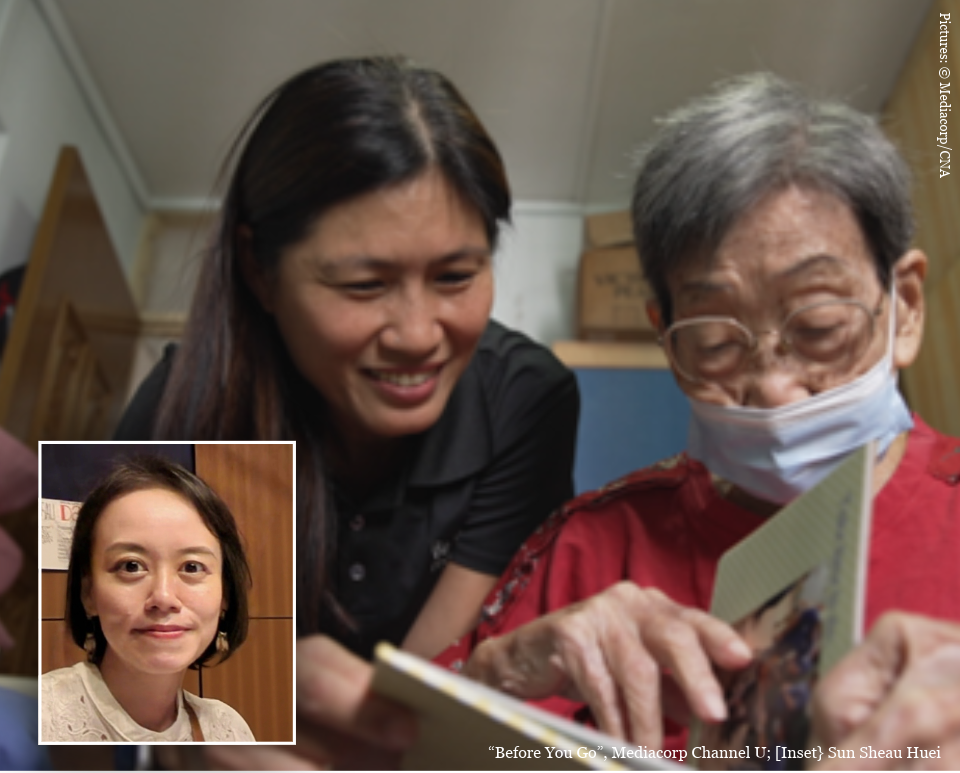
Reality-documentary “Before You Go” looks death in the face, peels back the taboo and focuses on the option of peace and healing. Following people saying their last goodbyes, the six-part series won the 2025 ContentAsia Award for Best Factual Programme Made in Asia for a Single Asian Market.
“In many Asian cultures, death remains a taboo subject,” the show notes say. “In Singapore, this silence is especially pronounced.”
Produced by Singapore-based Threesixzero Productions for Mediacorp’s Channel U, “Before You Go” seeks to address misconceptions about palliative care and de-stigmatise the process of dying.
“The series reframes death not as something to be feared, but as a natural part of life – one that, when approached with openness and understanding, can bring peace and healing,” the production team says.
By following hospice care providers in their day-to-day work, the series also sheds light on the unsung heroes of palliative care, who dedicate their lives to ensuring that no one faces death alone.
At its core, “Before You Go” is about life. “It is about how we love, how we say goodbye, and how we leave behind a legacy of peace rather than regret.”
We spoke to Executive Producer Sun Sheau Huei about the series:
Do you remember the moment you identified this subject as viable for mainstream Chinese-language television?
“The idea first came at the tail end of the pandemic in 2022. Collectively, we’d all experienced some form of grief – whether it was loss of a loved one or the disruption of a way of life. It just felt like the right time to explore conversations around death and dying. There also hadn’t been a documentary series solely dedicated to death and dying in mainstream Chinese-language television, where the topic remains largely taboo. Yet Singapore is also one of the fastest-ageing nations in the world. A 2021 study by the Singapore Management University found that only five in 10 Singaporeans are open to discussing end-of-life plans with their loved ones. This reluctance often leads to misunderstandings, unspoken regrets, and unfulfilled last wishes. That is why we felt that it was important and timely to help normalise conversations surrounding death.”
“Before You Go” was the first series in mainstream Chinese-television in Singapore to deal entirely ...
Reality-documentary “Before You Go” looks death in the face, peels back the taboo and focuses on the option of peace and healing. Following people saying their last goodbyes, the six-part series won the 2025 ContentAsia Award for Best Factual Programme Made in Asia for a Single Asian Market.
“In many Asian cultures, death remains a taboo subject,” the show notes say. “In Singapore, this silence is especially pronounced.”
Produced by Singapore-based Threesixzero Productions for Mediacorp’s Channel U, “Before You Go” seeks to address misconceptions about palliative care and de-stigmatise the process of dying.
“The series reframes death not as something to be feared, but as a natural part of life – one that, when approached with openness and understanding, can bring peace and healing,” the production team says.
By following hospice care providers in their day-to-day work, the series also sheds light on the unsung heroes of palliative care, who dedicate their lives to ensuring that no one faces death alone.
At its core, “Before You Go” is about life. “It is about how we love, how we say goodbye, and how we leave behind a legacy of peace rather than regret.”
We spoke to Executive Producer Sun Sheau Huei about the series:
Do you remember the moment you identified this subject as viable for mainstream Chinese-language television?
“The idea first came at the tail end of the pandemic in 2022. Collectively, we’d all experienced some form of grief – whether it was loss of a loved one or the disruption of a way of life. It just felt like the right time to explore conversations around death and dying. There also hadn’t been a documentary series solely dedicated to death and dying in mainstream Chinese-language television, where the topic remains largely taboo. Yet Singapore is also one of the fastest-ageing nations in the world. A 2021 study by the Singapore Management University found that only five in 10 Singaporeans are open to discussing end-of-life plans with their loved ones. This reluctance often leads to misunderstandings, unspoken regrets, and unfulfilled last wishes. That is why we felt that it was important and timely to help normalise conversations surrounding death.”
“Before You Go” was the first series in mainstream Chinese-television in Singapore to deal entirely with palliative care. Do you think this was a blessing or a curse for the production team?
“Whether any series had been done on palliative care or not, the subject itself would always be a challenging one for any production team as it requires access into some of the most private and tender moments in people’s lives. I am deeply grateful to the individuals and their families who allowed us into their vulnerability and offered us such intimate perspective so that we can explore our relationship with death, and it can inspire us in the way we live.”
Did you have any reservations about dealing with palliative care in a TV series – and if you did, what were they?
“I didn’t have any reservations, as I’ve worked on related topics before. My main concern was always sensitivity and empathy towards the individuals at the end of life and their family members – ensuring that our presence did not add unnecessary stress or discomfort, and that we remained respectful and unobtrusive throughout the process. It was important that participants felt safe in how their stories were shared. Another consideration was whether my team would be able to navigate the complex emotions involved in bearing witness to our participants’ final journeys. We’re human too, and we feel deeply for what they and their families go through. Personally, I allowed myself to sit with these emotions and let them guide me in telling their stories with heart and purpose.”
What were some of your considerations around reframing a stigmatised situation to make it more palatable to Singapore’s audience?
“I think it comes back to sensitivity, empathy and intentionality. We’re mindful of how certain images or conversations might be received by the audience, and why it matters to share them. There is naturally a lot of fear surrounding death and palliative care, and it is not always easy to witness moments of pain, grief or difficulty. But even in such situations, there are deeply human moments of love, courage, resilience and we strived to allow these to come through. It’s important for people to see that there can still be hope, even in circumstances beyond our control. In doing so, it can help address some misconceptions people might have about palliative care and the end-of-life journey.”
How did you go about finding people and families to participate? What was your pitch to them? What – if any – was the main reservation?
“As each episode is centred around one to two care providers, we reached out to different sectors within palliative care, who then introduced us to patients and families who might be open to sharing their stories. People come on board when we share the common vision, one of which is to raise awareness on palliative care; the other is to illustrate that saying goodbye does not only involve pain and grief, it can also be healing, meaningful and beautiful. The main reservation was often privacy, and how the portrayal might impact the individuals and their families. Our approach was to treat every participant with care and respect, always honouring their dignity and that of their families.”
Did you find yourselves in a position where you had to draw a line between what you thought was useful for audiences to know and what may have seemed intrusive?
“This is a question we constantly hold at the back of our minds. While we seek to be truthful in sharing the participants’ journeys, we are aware that this can be a deeply vulnerable period in a person’s life. Considerations are made to what we put on screen and how we choose to show it. For example, physical changes are an inevitable part of the end-of-life process, and we have to consider how to depict them in a way that still preserves dignity. Similarly, moments of physical pain need to be handled with care, and not unnecessarily prolonged for effect.”
Was there anything you were particularly nervous about?
“I think the main tension point would be the production deadline! Given the subject nature, it is not easy to get participants on board as there is naturally a lot of sensitivity and hesitation around sharing such personal end-of-life journeys, and it takes time to build trust with our participants.”
How long did the programme take to produce?
We took about 10-11 months.
What would you like the audience take-away to be?
“I hope this series can help shift the perception of death, that it’s not something depressing to be avoided, but a deeply human experience that can also be filled with love, gentleness and compassion. May these intimate and delicate conversations be a doorway for us to contemplate death, and most importantly, what matters most in life.”
Has there been any feedback that made you particularly happy?
“I am especially heartened when I hear that the documentary has become a cherished memory for the participants and the families, and that it can offer some comfort even after their loved ones have passed on. It also means a lot when viewers share that the series has struck a chord with them. It’s an honour to offer a different perspective on the end-of-life journey, and I have deep respect and gratitude for the participants who entrusted us with their stories.”
ContentAsia’s special interview series talks to winners of the ContentAsia Awards about how and why their shows were made, from the first idea to the final cut. The series puts the spotlight on original productions from across Asia and the people behind them.
Published on ContentAsia’s dedicated Awards platform on 7 October 2026. Access ContentAsia Awards Focus here
Previous