







FEATURES

ContentAsia Awards Focus: “What pushes a person to the edge of one life and convinces them to gamble everything on another?”
18 May 2026
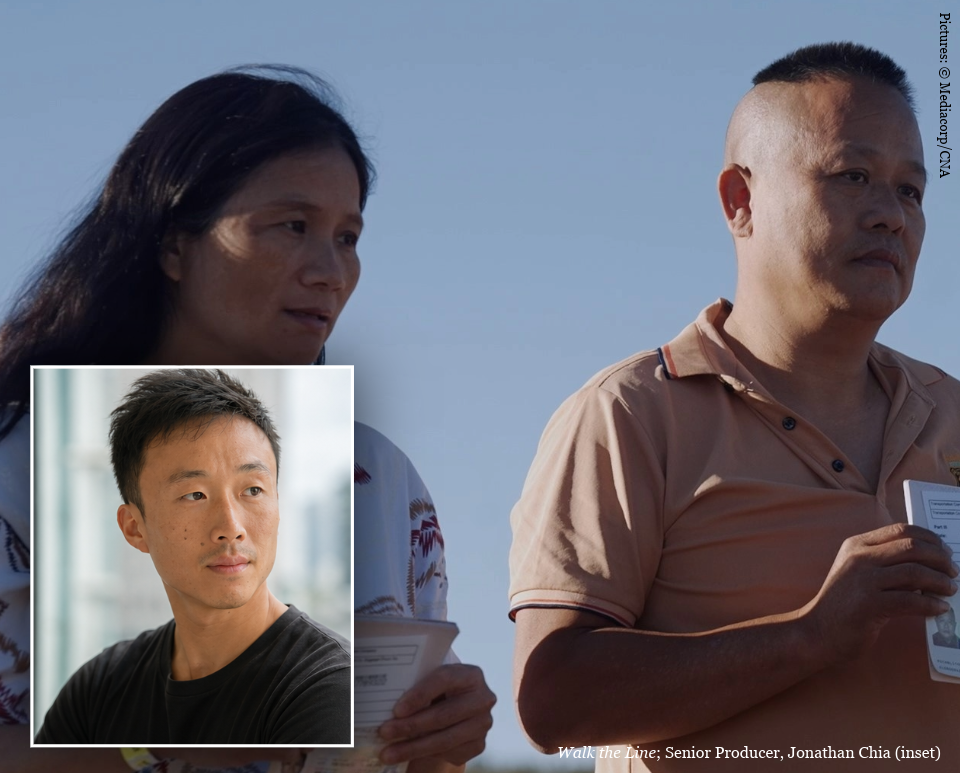
2.5 million migrants entered the US illegally via the southern border in 2023. Nearly 40,000 of them came from China. In “Walk the Line”, CNA correspondent Wei Du joined Chinese migrants on the perilous journey, trying to understand what drove them to such desperation and witness firsthand the hopes and despair on the migration trail.
The series won the ContentAsia Award in 2025 for Best Current Affairs Programme Made in Asia for Regional Asia and/or International Markets.
In our expanded focus on ContentAsia Award Winners, we spoke to producer Jonathan Chia about filming in territories controlled by drug cartels and criminal gangs, and talking to informants, smugglers, anonymous government officials and activists, and exposing the ongoing exploitation and challenges migrants face even after reaching their destination.
“A documentary like “Walk the Line” cannot be made recklessly,” Chia said. “The subject itself is already dangerous. Our job was not to add to that danger.”
What was the line between seeing clips on social media and the series’ greenlight from CNA?
There was definitely not a straight line from scrolling social media to getting on a plane.
The idea did begin in a very modern way. We were seeing clips of Chinese migrants documenting their own journeys... At first, it felt almost unreal. People filming themselves crossing jungles, sleeping in camps, dealing with smugglers and posting the whole thing online. But the more we looked, the more we realised this was not just a social media trend. It was a real migration phenomenon unfolding in public view, with very human stories behind it.
The challenge was turning that into a responsible documentary. We had to show that the route was real, that the people were contactable, that the story had depth beyond danger and spectacle and that we could film it without putting contributors or crew at unnecessary risk. There were many hoops. Editorially, we had to be very clear about what the story was. We were not making a “how to cross the border” film. We were trying to understand why people were prepared to risk everything for ...
2.5 million migrants entered the US illegally via the southern border in 2023. Nearly 40,000 of them came from China. In “Walk the Line”, CNA correspondent Wei Du joined Chinese migrants on the perilous journey, trying to understand what drove them to such desperation and witness firsthand the hopes and despair on the migration trail.
The series won the ContentAsia Award in 2025 for Best Current Affairs Programme Made in Asia for Regional Asia and/or International Markets.
In our expanded focus on ContentAsia Award Winners, we spoke to producer Jonathan Chia about filming in territories controlled by drug cartels and criminal gangs, and talking to informants, smugglers, anonymous government officials and activists, and exposing the ongoing exploitation and challenges migrants face even after reaching their destination.
“A documentary like “Walk the Line” cannot be made recklessly,” Chia said. “The subject itself is already dangerous. Our job was not to add to that danger.”
What was the line between seeing clips on social media and the series’ greenlight from CNA?
There was definitely not a straight line from scrolling social media to getting on a plane.
The idea did begin in a very modern way. We were seeing clips of Chinese migrants documenting their own journeys... At first, it felt almost unreal. People filming themselves crossing jungles, sleeping in camps, dealing with smugglers and posting the whole thing online. But the more we looked, the more we realised this was not just a social media trend. It was a real migration phenomenon unfolding in public view, with very human stories behind it.
The challenge was turning that into a responsible documentary. We had to show that the route was real, that the people were contactable, that the story had depth beyond danger and spectacle and that we could film it without putting contributors or crew at unnecessary risk. There were many hoops. Editorially, we had to be very clear about what the story was. We were not making a “how to cross the border” film. We were trying to understand why people were prepared to risk everything for this journey.
... as the research deepened, the stronger question became: what does it say about the world today that ordinary people are willing to take such extraordinary risks? That shift helped the project become more than a perilous journey. It became a story about desperation, aspiration, misinformation, courage and the enormous gap between what people imagine a new life will be and what it actually costs to get there.
What was the most hair-raising moment for the production team?
There were a few moments where the risk suddenly felt very real, but the most hair-raising ones were not always the most cinematic. Sometimes it was the quiet moments – realising we were in a place where control could shift very quickly, or that the people around us were watching us more closely than we wanted. When you are filming a route that involves smugglers, desperate travellers, border enforcement and criminal opportunists, you become very aware that your camera is both your tool and your vulnerability.
Chia also talked about fixers, risks, safety, ethics, surprises, storytelling choices, separating information from noise, editing conversations, balance, tone, and the value of asking: “What brought you to this point?” That difference matters, he said.
Adapted from the original version of this article, published on ContentAsia’s dedicated Awards platform on 6 May 2026. Access ContentAsia Awards Focus here
Previous

Next