







FEATURES

Moscow сalling: what's attracting China's and Southeast Asia’s film industries to the Russian capital?
17 March 2026
As government-backed cooperation agreements extend through 2030 and production costs climb across traditional shooting destinations, Moscow is positioning itself as Eurasia's most compelling alternative for Chinese and Southeast Asian filmmakers.
When Asian producers scout international locations, they typically look west to Hollywood or east to familiar Asian backlots. But a new contender is quietly reshaping the map: Moscow.
Russian capital has spent the past three years constructing one of Eurasia's most sophisticated film ecosystems. With purpose-built studio lots expanding annually, a 45% production rebate that rivals anything in the region, and high-level government cooperation frameworks already in place, Moscow is making a deliberate play for Chinese and Southeast Asian partnerships.
The question is no longer whether collaboration will grow - it's which producers will seize the moment first.
As the Moscow Film Cluster prepares to showcase its full capabilities at FILMART 2026 in Hong Kong (March 17-20, Booth 1E-A34), this is what Asian producers need to know about a production hub that's quietly becoming impossible to ignore.
The Infrastructure Proposition: More Than Just Soundstages
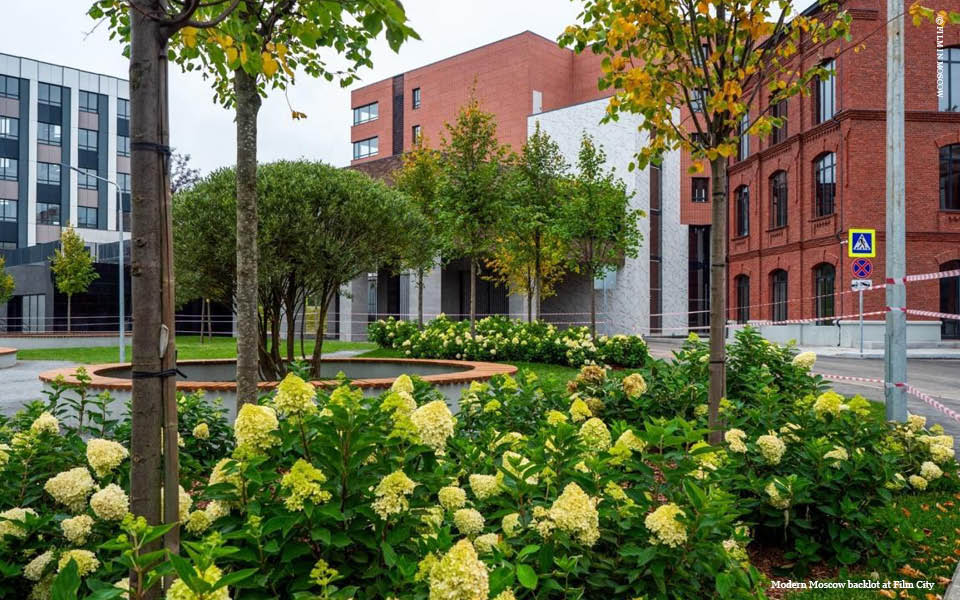
At the core of Moscow's offering lies Film Park, which has nearly doubled in size over the past year alone - from 180 to 356 hectares. With 35 permanent outdoor sets already constructed, including "Modern Moscow", "Moscow of Constructivism", "Brest Fortress", "Yurovo Airport" and "Vitebsk Railway Station," the park offers Asian productions the ability to shoot multiple time periods and geographical locations without leaving the city limits.
The scale of ambition becomes clearer when one considers expansion plans: by 2030, the park is projected to reach 1,110 hectares with 70 outdoor locations. Moscow's cultural leadership projects that 80% of all Russian films will utilize this infrastructure within five years.
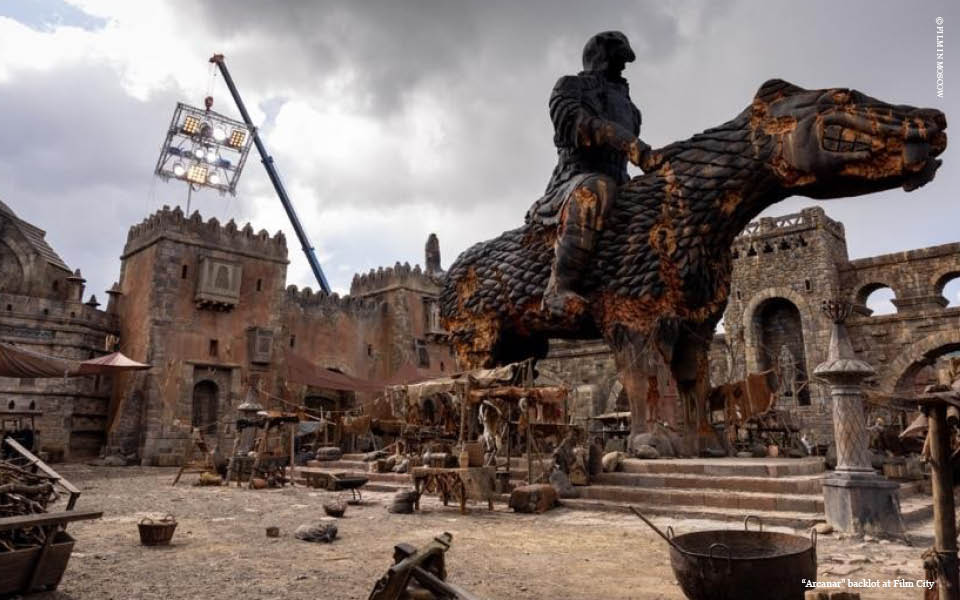
For Chinese and Southeast Asian producers accustomed to the comprehensive offerings of Hengdian World Studios, this model is immediately recognizable and reassuring. What makes this relevant for Asian productions: The ability to shoot European architectural periods (from medieval to Soviet constructivist) without expensive location travel. A single production can utilize the "Old Moscow" set for historical scenes and "Modern Moscow" for contemporary sequences, all within a 15-minute drive.
The Virtual Production Advantage
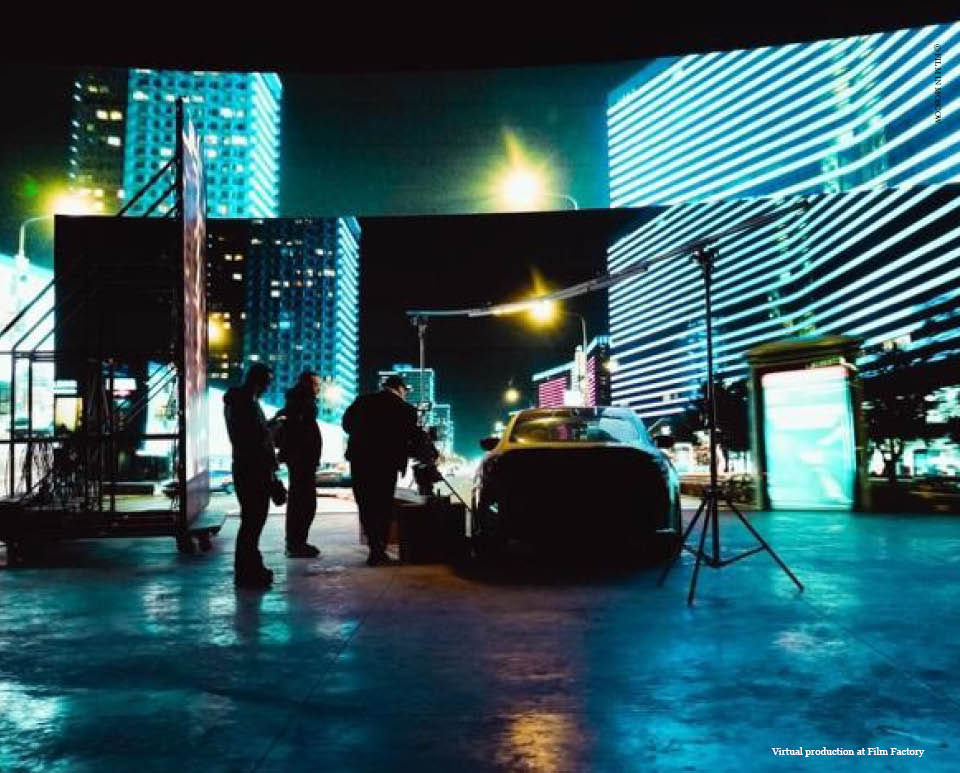
Perhaps the most technologically significant offering sits within the Film Factory: a 320-square-meter LED virtual production stage created by XOVP Studio, one of Russia's leaders in virtual cinematography. This facility, which Moscow has already demonstrated at the Shanghai International Film Festival, allows filmmakers to create complex visual effects indistinguishable from location footage.
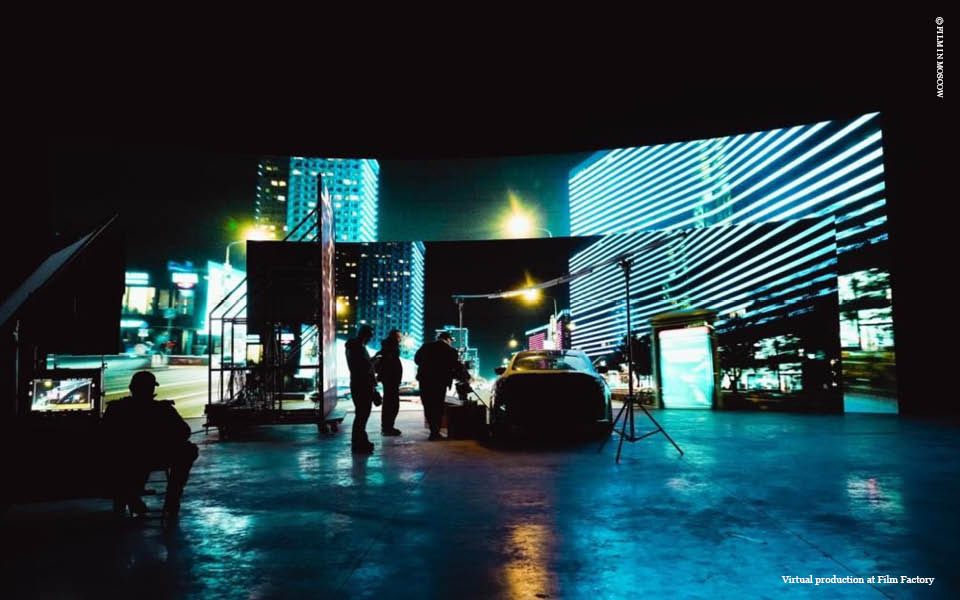
What makes this particularly relevant is the collaborative potential: Russian technical teams have developed specialized expertise in virtual production, VFX, and post-production that can integrate seamlessly with Asian creative direction. The technical infrastructure exists; what's needed is creative partnership.
Russian studios have cultivated particular strength in genre films - especially science fiction, historical epics, and large-scale action sequences - supported by proprietary technologies and accumulated technical experience. For Chinese and Southeast Asian producers seeking to elevate genre production values, Russian technical teams offer a shortcut past the learning curve.
The Financial Calculation: 45% and What It Actually Means
The headline figure - a production rebate up to 45% - deserves closer examination. The structure combines a 30% cash rebate on qualifying Moscow expenses with an additional 15% in cost-offsetting advantages through hospitality offers, service discounts and additional financial supporting measures such as grants.
Launched in April 2025 specifically with international productions in mind, this rebate program represents one of the most competitive financial incentives in Eurasia. For Asian producers managing tight budgets in an increasingly cost-conscious market, the arithmetic becomes compelling: nearly half of eligible local spending returns to the production.
But the Moscow Film Commission sweetens the deal with services that rarely appear in budgets but consistently consume producer attention: free location scouting, permit assistance, street closure coordination, and dynamic filming support. These are the logistical headaches that Moscow explicitly removes from the producer's plate.
The Visual Palette: What’s more beneficial
For Chinese and Southeast Asian cinematographers seeking to expand their visual vocabulary, Moscow presents something increasingly rare: a distinctly European aesthetic within reasonable travel distance from China.
The city offers layers of architectural history that simply don't exist elsewhere in Asia - medieval fortresses, Orthodox cathedrals with golden domes, Stalinist Gothic skyscrapers, Constructivist industrial buildings, and contemporary glass-and-steel business districts. All within a single metropolitan area.
This visual diversity allows Asian productions to shoot "Europe" without the costs and visa complications of pan-European shoots. A single Moscow-based production can access visual references ranging from St. Petersburg's imperial elegance to Soviet-era brutalism to hypermodern urban landscapes - often within the same day.
The Government Framework: Cooperation at the Highest Level
Cultural logic rests upon a political foundation. In May 2025, witnessed by the leaders of both nations, China's National Film Administration and Russia's Ministry of Culture exchanged the Action Plan for Co-Production Films Through 2030. This document formalizes cooperation across multiple dimensions: joint projects, mutual film distribution, film festival exchanges, archival preservation.
For producers considering long-term investments in cross-border production, this high-level endorsement matters. It signals that the bureaucratic pathways for co-productions - certification, distribution quotas, festival submissions - have been cleared at the highest levels.
The practical manifestation of this framework is the streamlined process for Russian-Chinese co-productions to receive national status in both countries, facilitating easier distribution and festival participation.
The Strategic Case for Chinese and Southeast Asian Producers
For Asian production considering Moscow, the value proposition can be summarized in five distinct advantages:
First, cost efficiency. The 45% rebate structure fundamentally alters production economics, allowing budgets to stretch further or resources to be redirected toward above-the-line elements.
Second, technical capability. From LED virtual production to specialized genre expertise, Russian crews offer world-class execution that can elevate Asian projects.
Third, logistical simplicity. The Moscow Film Cluster's integrated model - combining film commission services, studio facilities, location access, and post-production under one operational umbrella - reduces the friction of international shooting.
Fourth, governmental alignment. With bilateral agreements in place through 2030, co-productions benefit from streamlined certification and distribution pathways in both markets.
Fifth, visual diversity. Moscow offers Asian productions access to distinctly European visual aesthetics - architecture, urban planning, and natural landscapes that differ fundamentally from what is available elsewhere in Asia - expanding the creative palette for filmmakers.
Beyond the Transaction: Building Cinematic Bridges
The Russian-Chinese cinematic relationship has moved beyond experimental co-productions and festival curiosities. With bilateral agreements signed at the highest level and Moscow's film infrastructure expanding annually, the foundation for sustained collaboration is firmly in place.
For Chinese cinematographers seeking to expand their visual vocabulary, for producers looking to optimize budgets without compromising quality, and for studios aiming to access new markets - Moscow presents an opportunity that merits serious consideration.
The only question remaining is which producers will recognize the moment and act on it first.
Moscow Film Cluster will present its full production capabilities at FILMART 2026 in Hong Kong, March 17-20, Booth 1E-A34.
For collaboration inquiries:
Larisa Magkaeva, Head of International Department
📧 Email: [email protected]
💬 WeChat: larisa_magkaeva
🌐 Website: filminmoscow.com
For media inquiries:
Ekaterina Terekhova
📧 Email: [email protected]
💬 WeChat: tkatya
📞 Tel/WhatsApp: +79650517993
Brought to you by FILM IN MOSCOW
Previous