FEATURES

Production Update: Taiwan
26 November 2026
Taiwan’s co-production ambitions continue and government agencies seem as committed as ever to industry support and growth. But wins are uneven and the market has real concerns.
Like every other market in Asia, Taiwan continues a determined co-production quest, supported (and sometimes driven) by government agency, the Taiwan Creative Content Agency (TAICCA), well-backed private creative funds, and a community flush with ideas and eager for broader recognition. Taiwan’s Ministry of Culture highlights NT$10B (US$318M) budgeted over four years from 2024, and talked at the most recent TCCF event in Taipei about the second NT$10B tranche, so – publicly at least – intention seems to be alive and well. A less popular topic of conversation is the new budget, passed in mid-August after record delays and a year of threats, with consequences for culture and public broadcasting.
Have the powers that be been successful so far? Yes on the film front. Witness, for starters, new Taiwan-Japan co-produced feature “Arrested Memory”, funded by investors in Taiwan, Japan and Malaysia with support and subsidies from TAICCA, the Kaohsiung Film Fund, the Taipei City Government and agencies in Japan.
Not so much if you tally up the TV series that have been or are being produced and then acquired to air. And even less if success is measured by another of the mission’s drivers – international visibility.
It’s not for lack of trying. A handful of Taiwanese series are carried on global streamers led by Netflix, which is the most active international platform in Taiwan in both production and acquisition.
This year, HBO finally released “Fired Up!” – the Taiwan adaptation of Korea’s “Itaewon Class”, announced in 2023. Insiders say the move was more about cleaning up ahead of the Skydance merger than about commitment to Taiwanese originals. Other foreign platforms are considered to be making short-term decisions to tick necessary boxes on their way to other goals like, for instance, satisfying domestic distribution contracts rather than anything strategic.
Netflix’s 2026 lineup announced at the beginning of the year shows seven series (plu...
Taiwan’s co-production ambitions continue and government agencies seem as committed as ever to industry support and growth. But wins are uneven and the market has real concerns.
Like every other market in Asia, Taiwan continues a determined co-production quest, supported (and sometimes driven) by government agency, the Taiwan Creative Content Agency (TAICCA), well-backed private creative funds, and a community flush with ideas and eager for broader recognition. Taiwan’s Ministry of Culture highlights NT$10B (US$318M) budgeted over four years from 2024, and talked at the most recent TCCF event in Taipei about the second NT$10B tranche, so – publicly at least – intention seems to be alive and well. A less popular topic of conversation is the new budget, passed in mid-August after record delays and a year of threats, with consequences for culture and public broadcasting.
Have the powers that be been successful so far? Yes on the film front. Witness, for starters, new Taiwan-Japan co-produced feature “Arrested Memory”, funded by investors in Taiwan, Japan and Malaysia with support and subsidies from TAICCA, the Kaohsiung Film Fund, the Taipei City Government and agencies in Japan.
Not so much if you tally up the TV series that have been or are being produced and then acquired to air. And even less if success is measured by another of the mission’s drivers – international visibility.
It’s not for lack of trying. A handful of Taiwanese series are carried on global streamers led by Netflix, which is the most active international platform in Taiwan in both production and acquisition.
This year, HBO finally released “Fired Up!” – the Taiwan adaptation of Korea’s “Itaewon Class”, announced in 2023. Insiders say the move was more about cleaning up ahead of the Skydance merger than about commitment to Taiwanese originals. Other foreign platforms are considered to be making short-term decisions to tick necessary boxes on their way to other goals like, for instance, satisfying domestic distribution contracts rather than anything strategic.
Netflix’s 2026 lineup announced at the beginning of the year shows seven series (plus two in production) and one film – director Shih-Ching Tsou’s “Left-Handed Girl”, an international co-production involving producers in the U.K. and France, alongside support from Taiwan’s Ministry of Culture film fund and the Taipei Film Fund. The 2026 series lineup includes the upcoming “Confessions” (from writer/director Wong Ching-po), and Hung Tzu-hsuan-directed action-comedy “The Fixers”, which premiered in September 2026.
At the same time, international audiences have been relatively slow to get on board.
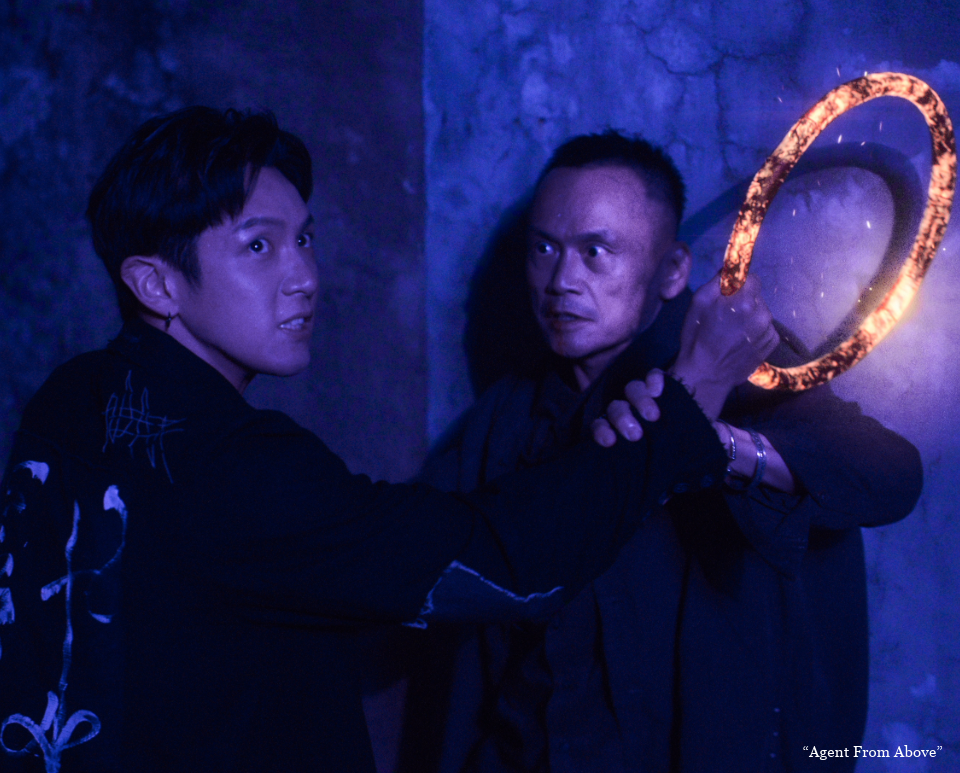
Only one Taiwanese title – fantasy series “Agent from Above” based on Teensy’s novel “The Oracle Comes” – made it to the platform’s global non-English series top 10 in 2026. The eight-episode fantasy action series about a troubled young man who serves as a spirit medium for a Taoist deity to atone for his past and protect the mortal realm from a supernatural threat appeared for one week (30 March to 5 April) at #6 with 8.1 million hours viewed.
Taiwanese series have to date landed best in Chinese-speaking markets.
New co-productions include director Chiang Feng-hung’s 10-episode fantasy mystery romance title “See You At 11”, a co-production between Singapore’s Mediacorp and Taiwan’s Three-Giant Production. The series is scheduled to release in 2027. The project is supported by TAICCA via its 2025 Project Investment Plan, the Taipei Film Commission and Taipei Film Fund, as well as by Singapore’s Infocomm Media Development Authority (IMDA).
At its 2026 TCCF event in November, TAICCA said its four joint-venture production funds had invested NT$740 million (US$23 million) in 27 projects in a year, including music festivals, film and TV. These attracted NT$4.9 billion (US$153 million) in private investment.
Compared to its Asia neighbours, Taiwan’s budgets are respectable. Scripted series are made for between US$400,000 and US$700,000 per episode.
What’s keeping Taiwanese producers up at night as 2026 draws to a close is this: Local TV stations are either not spending or paying half or two-thirds at most of what they used to. And the clear preference is to produce in-house. Where exactly does this leave the production industry? Definitely concerned. But hoping for the best.
Published in ContentAsia's December 2026 Magazine
Previous

Next