






NEWS

AI: “Quality content with the best human talent”; Utopai Studios’ Cecilia Shen on Film & Franchise Investments, Opportunity & What’s Next
29 June 2026
China’s Huace is reimagining “Monkey King” for global audiences in partnership with U.S. AI studio Utopai. The announcement earlier this month came a few days after Utopai said it was backing Korean-German co-pro “Half Moon” from Silver Bear-winning filmmaker Hyo-joo Yang as part of its expanding original film slate.
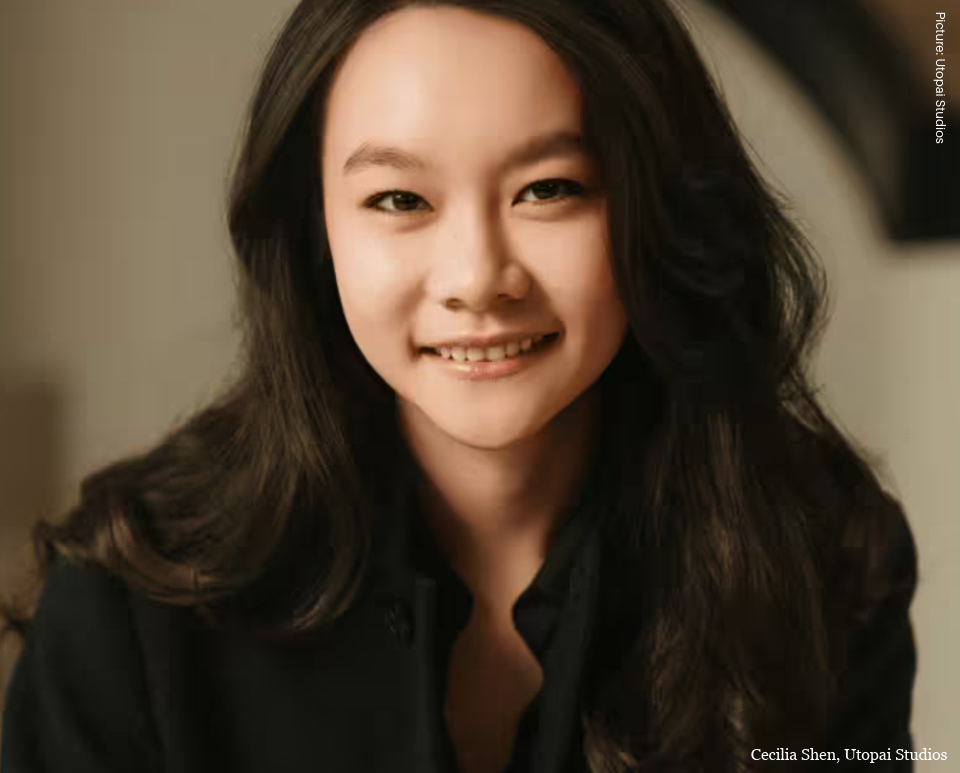
Both projects give credence to Cecilia Shen’s view of AI as a creative enabler and “another step in Utopai Studios’ push to build a global, filmmaker-driven production studio model focused on original films, international co-productions, and emerging creative voices”.
Shen, Utopai Studios’ 25-year-old co-founder and CEO, said the new projects spoke to the studio’s reason for being – “to help partners unlock iconic IP, expand worlds at franchise scale and bring ambitious stories to life in ways that were not possible before”.
During the “Half Moon” announcement, Shen said Utopai’s studio model would help change the situation where projects “struggle to reach audiences because they do not have the infrastructure, resources, or market support to move from vision to production”.
“Half Moon” represents “the kind of filmmaker-driven, internationally relevant story we want to champion – deeply human, visually ambitious, and built around a singular creative voice,” she said.
Both “Half Moon” and “Journey to the West” will use Utopai’s cinematic storytelling AI system, PAI, which Shen acknowledges is not perfect – yet.
“We’re trying to make PAI the go-to infrastructure, so whenever you think about professional long-form content or production generation, you’ll be using PAI... We’re also trying to make sure that you can have control at every step, because that’s what creatives need... but I still think there’s a long way to go,” she said, referring, for instance, to training a visual language model and ensuring visual consistency across long-form productions.
“Half Moon” – Yang’s feature directorial debut – is co-produced by Germany’s In Good Company and Korea’s Paper Barn Studios, alongside Utopai Studios. The film als...
China’s Huace is reimagining “Monkey King” for global audiences in partnership with U.S. AI studio Utopai. The announcement earlier this month came a few days after Utopai said it was backing Korean-German co-pro “Half Moon” from Silver Bear-winning filmmaker Hyo-joo Yang as part of its expanding original film slate.
Both projects give credence to Cecilia Shen’s view of AI as a creative enabler and “another step in Utopai Studios’ push to build a global, filmmaker-driven production studio model focused on original films, international co-productions, and emerging creative voices”.
Shen, Utopai Studios’ 25-year-old co-founder and CEO, said the new projects spoke to the studio’s reason for being – “to help partners unlock iconic IP, expand worlds at franchise scale and bring ambitious stories to life in ways that were not possible before”.
During the “Half Moon” announcement, Shen said Utopai’s studio model would help change the situation where projects “struggle to reach audiences because they do not have the infrastructure, resources, or market support to move from vision to production”.
“Half Moon” represents “the kind of filmmaker-driven, internationally relevant story we want to champion – deeply human, visually ambitious, and built around a singular creative voice,” she said.
Both “Half Moon” and “Journey to the West” will use Utopai’s cinematic storytelling AI system, PAI, which Shen acknowledges is not perfect – yet.
“We’re trying to make PAI the go-to infrastructure, so whenever you think about professional long-form content or production generation, you’ll be using PAI... We’re also trying to make sure that you can have control at every step, because that’s what creatives need... but I still think there’s a long way to go,” she said, referring, for instance, to training a visual language model and ensuring visual consistency across long-form productions.
“Half Moon” – Yang’s feature directorial debut – is co-produced by Germany’s In Good Company and Korea’s Paper Barn Studios, alongside Utopai Studios. The film also has German public funding and is scheduled to begin principal photography in Germany in August 2026.
Utopai said “Half Moon” would “remain grounded in live-action performance, director-led storytelling, and traditional cinematic craft, with PAI serving as a production tool for specific visual components of Yang’s creative vision”.
“Half Moon” follows the 13-year-old Korean-German Yeri (played by Rina Kim) and her aunt Ah-Jin (Elisa Hofmann) as they spend a fractured summer together on a remote North Sea island. The film explores loneliness, family trauma, belonging, and emotional repair.
“Journey to the West: The Lost Five Hundred Years”, the reimagined legend of Monkey King Sun Wukong, involves animated series and theatrical releases as part of broad development ambitions built on the partnership Utopai and Huace announced in April this year.
The series follows Jin Chanzi, a fallen celestial monk condemned to 10 reincarnations to complete an impossible pilgrimage.
PAI will support mythological world-building, character continuity, stylised action, multi-episode storytelling and reusable digital assets designed to evolve across future seasons and theatrical extensions.
Huace will produce the series; Utopai Studios will hold distribution rights outside China.
The first season is planned as an animated series for distribution across broadcast, streaming, and digital platforms, with the broader franchise developed for future theatrical expansion.
Shen’s approach, which she outlines endlessly in a manic global speaking schedule, has made her a central character in the love-hate conversation around AI and filmmaking.
The world she’s building cuts across age, past experience, filmmaking pedigree and geography, and rests on her belief that Utopai can redefine the future.
“The big entertainment company that we’re building is very different,” she told ContentAsia in an interview ahead of APOS (which she didn’t make because of flight delays). Shen is scheduled to speak at MIPCOM in October.
“We have to work with global young talent and young creatives to produce the next generation of IP, give them the freedom, give them the respect, and give them the creative space.
“At the same time, we also believe that technology is a very important part, all of it, so it can become a really great flat world, and that is really what we’re trying to achieve out there,” she said.
Does she think AI solves money problems or story problems?
AI will never solve story problems, she said. “Story is key, and humans are the key to representing the story.”
But it can solve budget challenges. “AI will enable much higher quality content with the best possible human talent,” she said.
Previous

Next