






NEWS

ATF 2025 eDailies: ContentAsia’s Evening Update: Singapore gov’t promises major $$$ & more in ContentAsia @ ATF (Wednesday, 3 December 2025)
03 December 2025
|
Evening update: Wednesday, 3 December 2025
Singapore rolls out S$200-million talent accelerator programme; producers prick up their ears at promises of funding for cross-border co-productions
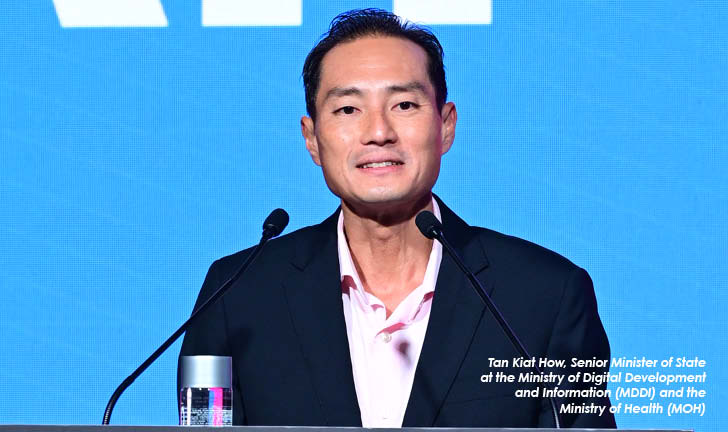
Singapore government agency, the Infocomm Media Development Authority (IMDA), is rolling out a S$200-million/US$148-million three-year talent accelerator programme (TAP) to support Singapore’s media ecosystem. This includes co-funding for regional and global co-productions, including films and TV series as well as IP adaptations for screen. IMDA said this will “establish Singapore as a co-production hub in the region”. Application process details will be released in the first quarter of 2026. The announcement was made by Singapore’s Senior Minister of State for Digital Development and Information & Ministry of Health (MOH), Tan Kiat How, during the opening of the ATF Market this morning (3 Dec).
Singapore’s Mediacorp joins China’s Linmon Media on "Only Thirty Five", sequel to hit series; five new MoUs signed boost ties with Japan, Thailand and Taiwan
Singapore’s Mediacorp has joined forces with China’s Linmon Media to produce new drama series, “Only Thirty Five” (三十五而已). Linmon also showcased its 2026 slate during the ATF market, including a survival thriller, fantasy, medical themes and contemporary romance. In additional announcements at ATF this afternoon, Mediacorp unveiled five new co-production partnerships – one each in Japan and Thailand and three in Taiwan.
FEATURES
Acquired tastes: Thai director Pen-Ek Ratanaruang on “Morte Cucina”, working with Japan’s Miike Takashi, and why broken English is the best language
“These days in places like Bangkok, you hear more Japanese or English on the streets than Thai. It’s actually very good. Your world expands…,” Thai director Pen-ek Ratanaruang says. “Borders don’t matter any more. Language doesn’t matter any more. We all communicate by the most common language in the world – broken English. Broken English is the best language.”
Japan’s superpower: manga x anime x gaming
Serial entrepreneur Fujimura Tetsu argues that the width and depth of Japanese IP resources make the country an entertainment industry leader. Laying out a detailed economic case for this shift, he hailed Japanese IP as a “treasure chest” that has a “remarkable future” ahead of it.
Access ContentAsia's latest magazine here and browse back issues of all our publications at www.contentasia.tv.
|
|
|
© Pencil Media Pte Ltd 2025. All rights reserved. |
































Previous

Next